


The Zuper vs AccuLynx debate often comes down to one question: Does your roofing company need a platform built for flexibility and field operations, or one structured around traditional sales workflows? Both tools serve residential roofing contractors, but the difference in how they handle day-to-day coordination, from inspection to invoice, can determine whether your team moves faster or fights the system.
This comparison evaluates Zuper vs AccuLynx through the lens of daily roofing operations, including sales processes, job management, and field coordination. The goal isn’t to declare a universal winner but to show where each platform excels and where Zuper’s modern architecture, AI-assisted workflows, and operational flexibility create measurable advantages as job volume increases.
Platform Comparison: Zuper vs AccuLynx at a Glance
The table below compares outcomes and core capabilities across eight categories critical to roofing operations. The data reflect typical implementations for mid-size roofing contractors (10-50 employees).
| Category | Zuper | AccuLynx |
| Implementation Timeline | 4 weeks average | 6-8 weeks average |
| Same-Day Close Rate Improvement | +20% | Limited data available |
| Time Savings per User/Week | 8 hours (average across customers) | 9 hours (per company data) |
| AI-Assisted Field Documentation | Yes (Voice Notes, Walkthrough, Job Summary) | No native AI features |
| Workflow Customization | No-code configuration, role-based | Template-based, requires support for changesweas |
| Mobile Offline Capability | Full offline mode with auto-sync | Limited offline functionality |
| New Hire Ramp Time Reduction | 40% reduction | Not publicly reported |
| Technology Cost per Employee/Month | Reduced $250 (Maven Roofing) | Variable, additional apps are often required |
Key Insight: Zuper reduces onboarding time and consolidates tools that AccuLynx users typically supplement with CompanyCam, SumoQuote, or Slack. AccuLynx offers deeper supplier integrations (ABC Supply, QXO, SRS Distribution), but it requires more manual coordination between the field and the office.
Sales Workflow: Zuper vs AccuLynx in Practice
From Lead to Signed Proposal
Both platforms handle CRM functions, but they differ in how they manage the inspection-to-proposal pipeline.
AccuLynx positions itself as a roofing-specific CRM with strong estimating templates and direct material ordering from major suppliers. Sales reps can order EagleView or Hover measurements directly within AccuLynx, pull pricing from ABC Supply or SRS catalogs, and generate estimates quickly. The system uses predefined templates to maintain consistency across quotes.
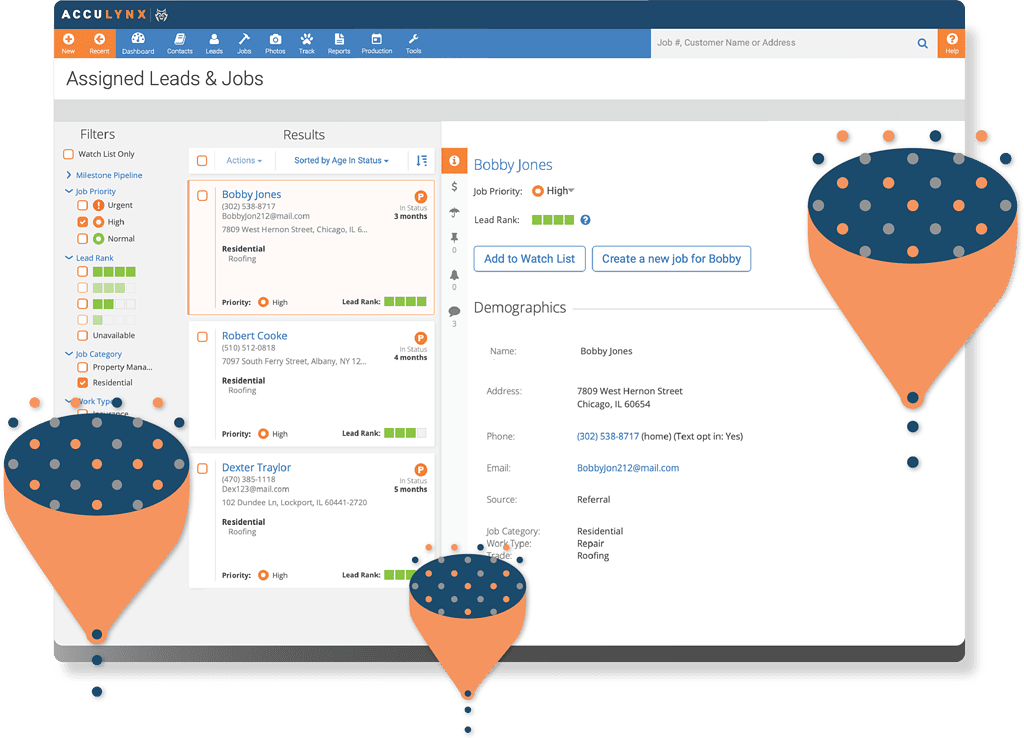
However, many AccuLynx users report needing separate tools for polished proposals. The native proposal builder is functional but lacks the visual flexibility contractors want when presenting good-better-best options to homeowners. This is where tools like SumoQuote enter the stack.
Zuper integrates the entire sales cycle, from lead capture, inspection documentation, and measurement import (Hover, QuickMeasure) to proposal generation without requiring third-party apps. The platform’s AI Voice Notes and AI Walkthrough features allow reps to document roof conditions hands-free, with automatic transcription and photo organization. Proposals support branded templates with configurable pricing tiers, and signatures and deposits can be captured on-site via the mobile app.
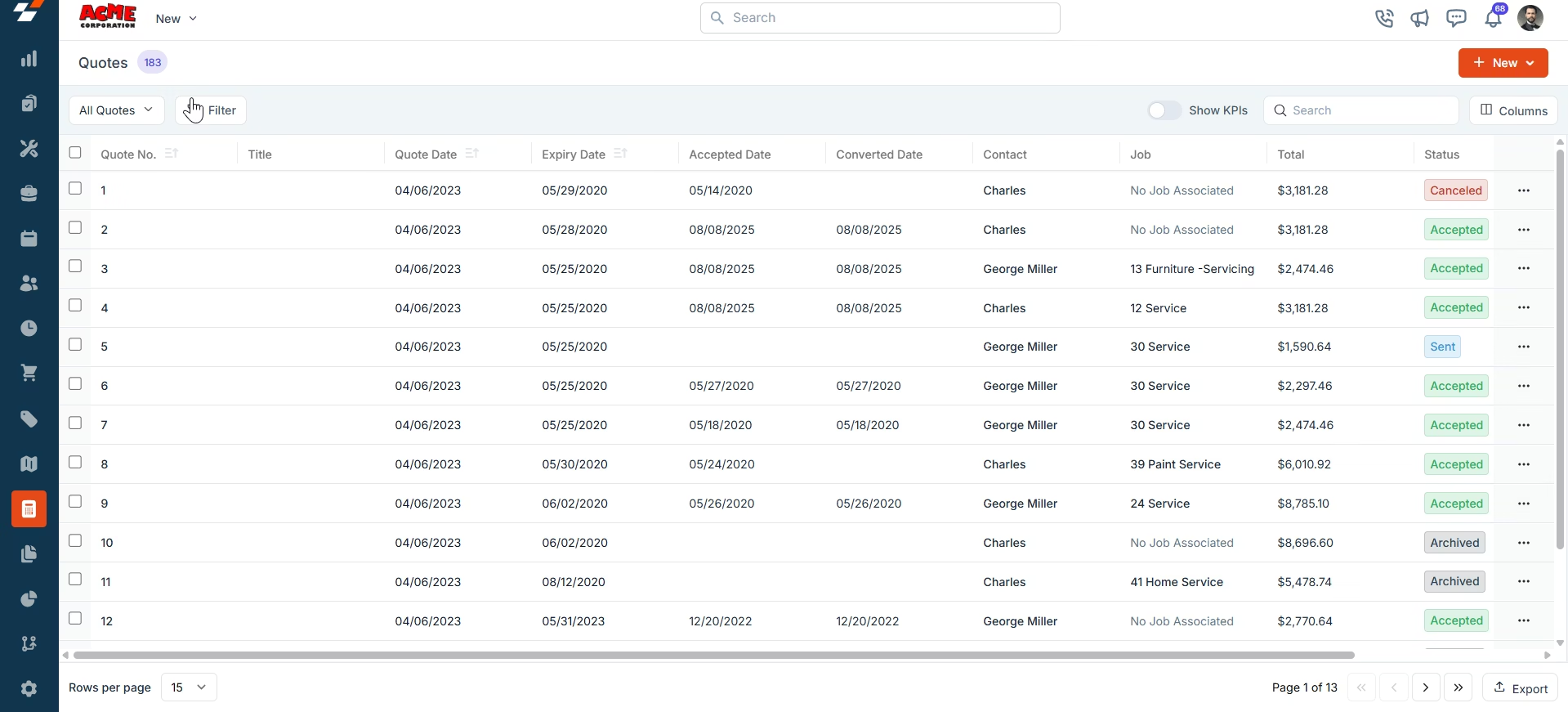
The practical outcome: Zuper customers report 20% higher same-day close rates because the workflow keeps reps on-site and in front of the customer longer, reducing the “I’ll send that to you later” friction that kills momentum.
Job Management and Field Coordination
Where Operational Differences Surface
Once a job is sold, the gap between Zuper and AccuLynx widens in Zuper’s favor, thanks to its field-first architecture.
AccuLynx excels at office-based project tracking. Jobs move through customizable milestones, and production managers can monitor status, assign tasks, and track supplements. The platform’s supplier integrations streamline material ordering, and the recent crew app update improves communication between office staff and field teams. However, AccuLynx’s mobile app historically focused on sales reps, not production crews. Field updates often require manual entry back at the office, and real-time visibility into crew location, progress, or issues is limited compared to Zuper.
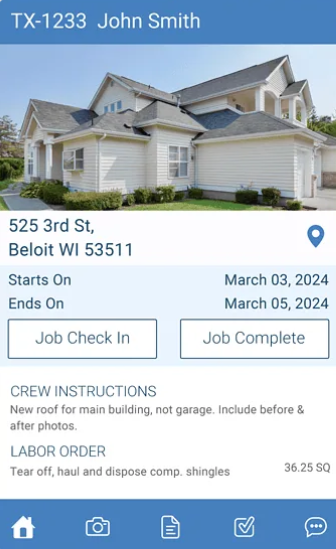
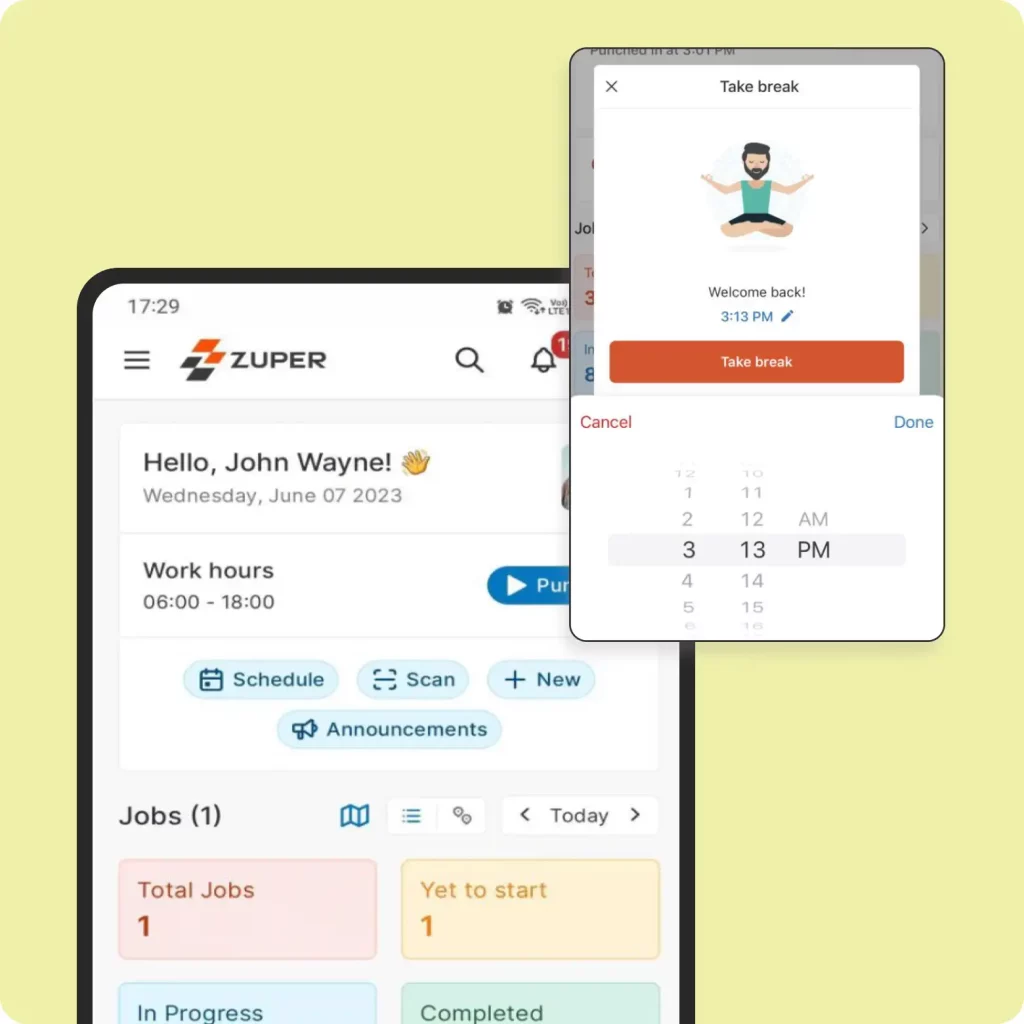
Zuper treats field coordination as a core function. The mobile app includes:
- GPS tracking and time stamping for crew clock-in/out
- Offline mode so teams can document work even without cell coverage
- AI Job Summary that automatically compiles notes, photos, and updates into structured recaps
- Checklists that guide crews through quality control steps
Production managers see real-time updates on a unified dashboard. When a crew completes a tear-off or encounters unexpected substrate damage, the office knows immediately. This eliminates the “what’s happening on that job?” phone calls that fragment the day.
The difference becomes acute as job volume scales. With 10 jobs in progress, both platforms work. With 50 simultaneous projects, Zuper’s automated status updates and AI-generated summaries prevent bottlenecks, while AccuLynx users often add Slack or CompanyCam to fill the gap.
AI and Workflow Automation
A Clear Differentiator
Zuper vs AccuLynx reveals the starkest contrast in AI capabilities.
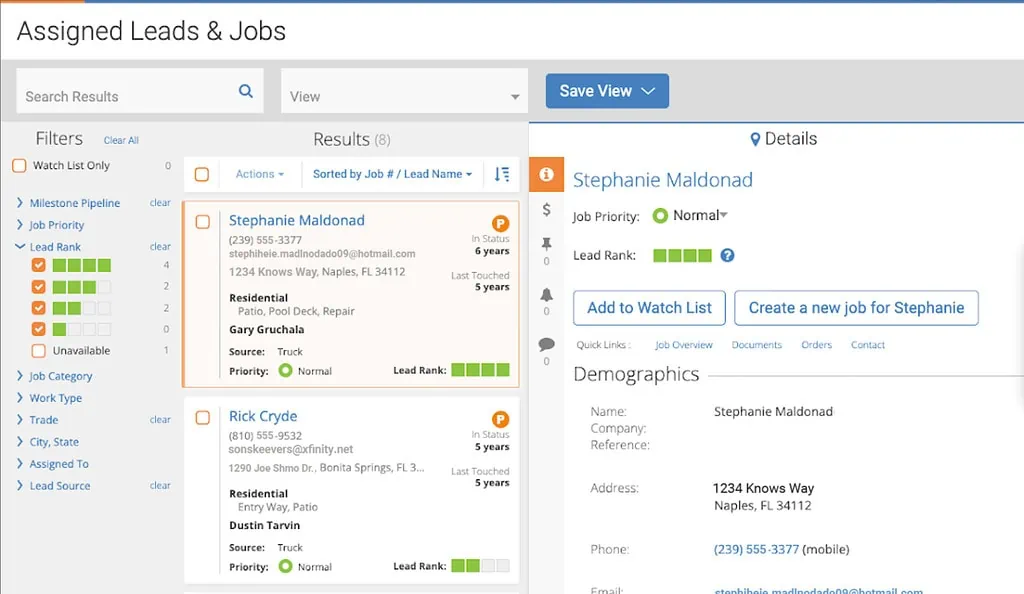
AccuLynx offers AI-powered lead intelligence to rank prospects by likelihood to buy, but it lacks AI-assisted field operations or automation beyond scheduled emails and task triggers. Workflow customization exists but requires working with AccuLynx support to configure templates or milestones.
Zuper embeds AI throughout the platform:
- AI Responder answers customer calls after hours, confirms appointments, and reschedules visits without human intervention
- AI Voice Notes converts spoken updates into organized text logs, eliminating typing on ladders
- AI Walkthrough turns a series of photos and narration into a structured inspection report
- AI Expense Scanner captures receipt details with a photo and auto-assigns costs to jobs
- AI Call Summary distills customer conversations into action items so teams don’t replay recordings
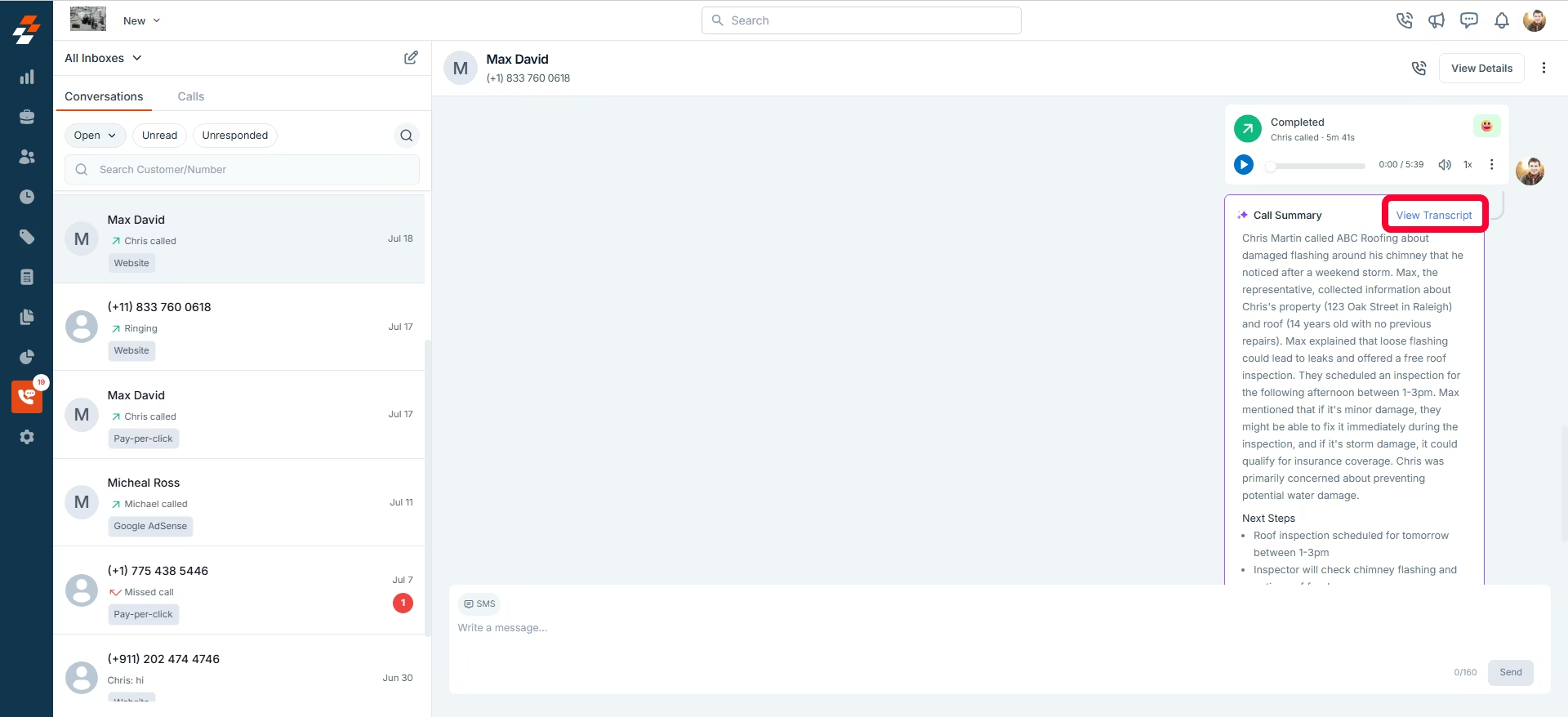
These aren’t novelty features. Maven Roofing attributes part of its eight-hour weekly time savings per person to AI automation. Roof Doctors cut call processing time in half using AI summaries.
Beyond AI, Zuper’s no-code workflow builder allows users to customize forms, checklists, and approval processes without developer support. This adaptability matters when onboarding new hires, adjusting to seasonal workflow changes, or scaling into insurance restoration work.
The Scalability Question
What Happens When You Grow?
AccuLynx scales vertically, adding users, enabling multi-location management, and stacking integrations. The platform handles large roofing operations well, but as companies grow, they typically add tools to address gaps: CompanyCam for photos, SumoQuote for proposals, Slack for team communication, and separate time-tracking apps for payroll.
Zuper scales horizontally by consolidating the stack. Zuper for Roofing replaces photo apps (an integrated gallery with AI search), proposal tools (native, branded proposals), communication platforms (team texting within Zuper), and payment processing (Zuper Pay). Maven Roofing reduced technology costs by $250 per employee per month by eliminating redundant subscriptions after migrating to Zuper.
The architectural difference: AccuLynx optimizes for sales and office workflows, assuming field coordination happens separately. Zuper optimizes for end-to-end operations, treating field, office, and customer interactions as one connected system.
Where Each Platform Wins
Choose AccuLynx if you:
- Prioritize deep supplier integrations (ABC Supply, QXO, SRS with direct ordering)
- Run a primarily sales-driven, storm-chasing model
- Need roofing-specific estimating templates immediately
- Prefer a platform with a long track record in the roofing vertical
Choose Zuper if you:
- Manage high job volumes with distributed crews
- Want AI-assisted documentation and automation
- Need customizable workflows without ongoing support requests
- Value mobile-first field coordination and real-time visibility
- Prefer consolidating your tech stack to reduce costs and training complexity
Making the Switch: What Roofing Contractors Need to Know
The Zuper vs AccuLynx decision often hinges on workflow philosophy. AccuLynx asks roofing companies to adapt their processes to fit the platform’s structure. Zuper asks, “How do you work today?” and configures around that.
Migration from AccuLynx to Zuper typically takes 30-45 days with proper planning. Data import, team training, and workflow mapping are handled during onboarding. Companies like Maven and Roof Doctors report full adoption within six weeks, with measurable productivity gains by week eight.
If your current system requires constant workarounds, if you’re texting photos because the app doesn’t sync, or re-entering data because tools don’t talk to each other, the friction is costing more than software fees. It’s costing time, accuracy, and the ability to scale without proportional overhead.
Final Verdict
The Zuper vs AccuLynx comparison isn’t about which platform has more features; it’s about which system aligns with your roofing operation’s rhythm. AccuLynx serves the office-centric, sales-heavy workflow well. Zuper delivers on the promise of a unified, field-first platform that adapts as you grow.
For roofing contractors tired of stitching together five apps and managing three logins, Zuper offers the operational clarity that comes from a single source of truth. For teams scaling past 30 jobs per month and feeling the strain of manual coordination, Zuper’s AI and automation aren’t luxuries; they’re the difference between controlled growth and chaotic scrambling.
Ready to see how Zuper vs AccuLynx plays out in your specific workflow? Schedule a personalized demo and walk through a live comparison tailored to your roofing operation’s needs.