

You’ve quoted a job that looked profitable on paper and bled money by week two. The measurement was slightly off. A permit fee didn’t make it into the estimate. Your crew had half a day of downtime waiting on a delivery that should have been ordered the moment the job was booked. None of it showed up until the invoice didn’t match the check.
This report identifies the sources of those losses. We compiled published industry benchmarks, independent accuracy research, and documented outcomes from roofing contractors using connected estimating platforms to show where estimate workflows break down, and what changes when they don’t.
If you’re evaluating estimating software for roofing contractors, the data below covers accuracy, admin time, and what happens to your crew after the proposal is signed.
How Estimate Errors Hit Your Margin and Your Crew’s Day
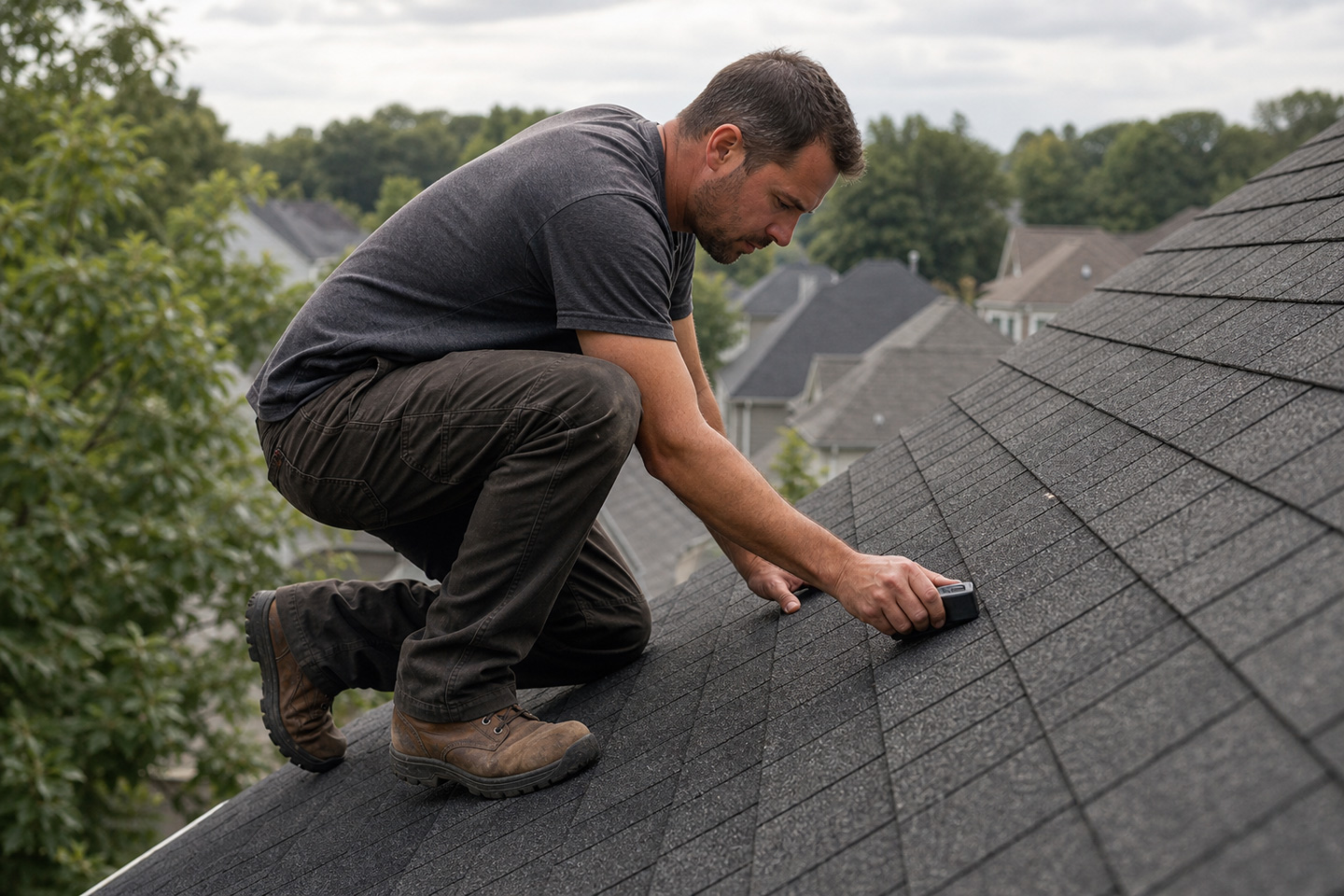
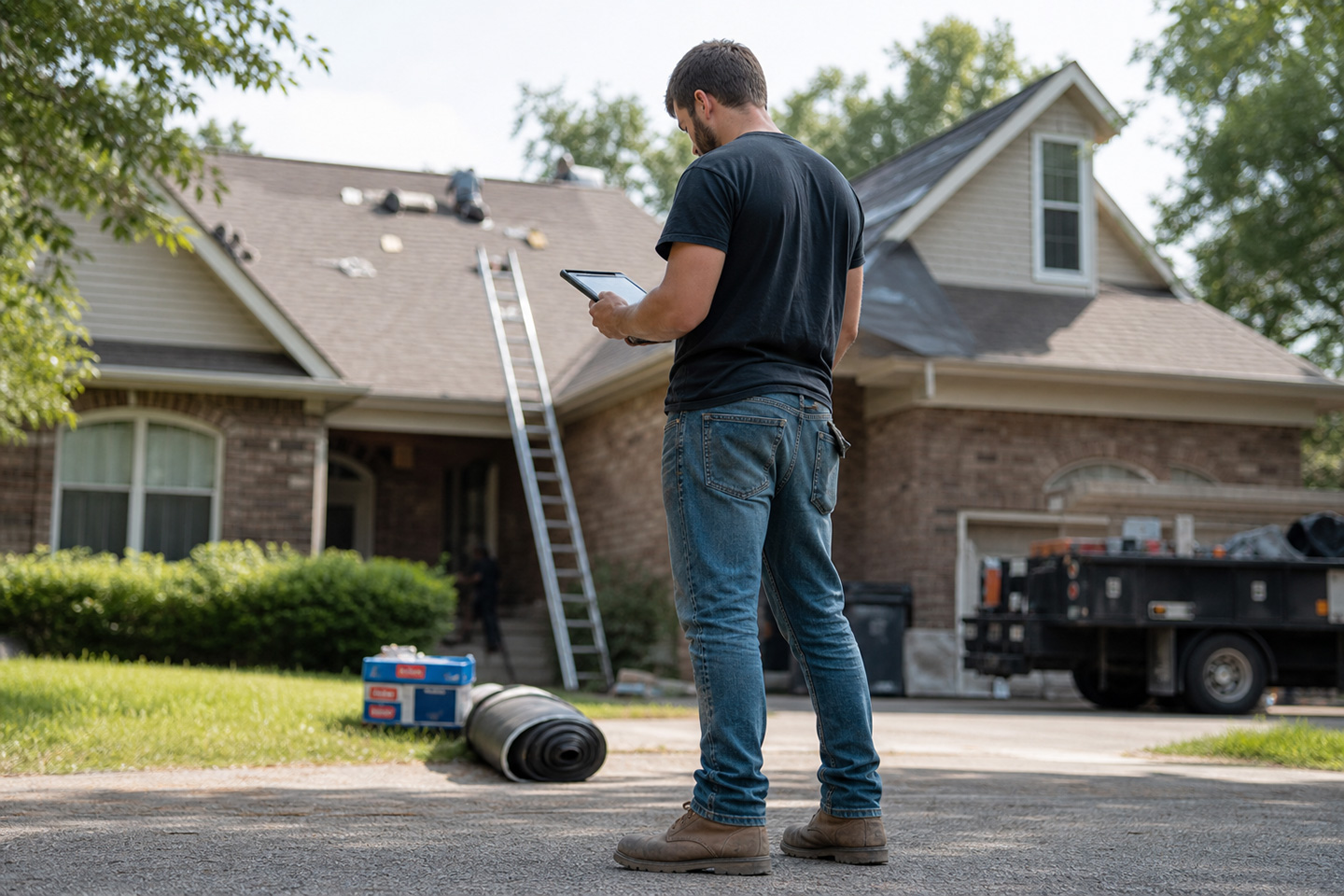
Estimating errors don’t show up during quoting. They show up when your foreman is standing on the deck at 7 a.m. with three squares short and a supplier who can’t deliver until tomorrow. By then, you’ve already lost the day.
Five Ways Estimates Break Down for Roofers in 2026
| Error Type | Typical Cost Impact | Primary Cause | Effect on Crew |
|---|---|---|---|
| Inaccurate measurements | Material shortages and rush delivery costs | Manual takeoffs, missed roof features | 1-2 day delay, emergency supply run |
| Missing line items | Unreimbursed costs absorbed into margin | Permit fees, disposal costs, and indirect expenses overlooked at quoting stage | Schedule pushback, homeowner friction |
| Poorly defined scope | Unplanned cost increases and change order disputes | Incomplete or ambiguous job documentation | Change orders, homeowner conflict |
| Manual calculation errors | Hours of unpaid labor on every affected job | Spreadsheet errors and transcription mistakes in re-entry | Repeat site visit |
| Outdated or incorrect material pricing | Margin erosion on every material-heavy job; roofing costs are 51.3% higher than in 2020 | Static price catalogs not updated to reflect current market costs | Jobs underbid; budget conflicts mid-project |
To see how quickly these errors stack up, picture a $15,000 reroof running a 20% margin. A missed measurement triggers a rush materials delivery. Forgotten permit and disposal fees get absorbed after the close. Two days of partial crew downtime while the materials situation gets sorted. Those three errors alone can eliminate most of your planned $3,000 profit, turning a 20% margin into something in the low single digits.
At the bid level, estimating errors are linked to a 30% drop in win rates and approximately 3% profit loss even on contracts that do close.
The material pricing row deserves a closer look. Construction input costs are 51.3% higher today than they were in February 2020, per Associated Builders and Contractors’ analysis of BLS Producer Price Index data released May 13, 2026. If your estimating tool pulls from a static catalog, you’re absorbing that gap on every material-heavy job.
The customer trust cost is real as well. When invoices don’t match estimates and projects run late, repeat business and referrals dry up. Contractors who consistently deliver on estimate and on schedule build reputations their competitors can’t replicate.
Standalone Estimating Tools Stop at the Proposal
Most roofing estimating software works fine at the proposal stage. Your numbers calculate correctly and the proposal looks professional. Once that estimate leaves the system, though, everything falls apart: scope details live in email threads, material quantities get re-entered elsewhere, and your crew gets a phone call instead of a structured brief.
Standalone vs. Integrated Estimating Platform Key Differences
| Capability | Standalone Tool | Integrated Platform |
|---|---|---|
| Aerial measurement accuracy | Manual re-entry from report | Auto-pulled: EagleView verified at 98.77% accuracy |
| Live material pricing | Static; updated periodically | Dynamic catalog via integration: prices current as of order date |
| Estimate-to-schedule trigger | Manual, email-based | Job record and scheduling workflow triggered on customer approval |
| Scope handoff to field crew | Separate document or phone call | Flows directly to foreman’s mobile app |
| Post-job cost vs. estimate reporting | Not included | Connected to QuickBooks for job-level cost vs. estimate tracking |
| On-site signature and payment | Paper or separate e-sign tool | Handled in the same workflow |
Each step in that left column is a manual handoff. Each handoff is a chance to drop scope details your crew needed before they loaded the truck. Note the measurement row: aerial tools like EagleView achieve 98.77% accuracy when independently verified by CompassData using LiDAR technology. That precision only protects you if the measurement flows directly into your estimate without re-entry. Manual transfer eliminates the accuracy advantage entirely.
Zuper’s Intelligent Quoting connects inspection findings, aerial measurements, and pricing rules into a single on-site workflow, so the scope your rep built is exactly what your foreman executes. Maven Roofing’s close rate went from 30% to 70% after making that switch.
The Hidden Admin Cost of Manual Estimating
Manual estimating software for roofing contractors creates an administrative burden that doesn’t appear on any estimate. Every quote requires a site visit, measurements, spreadsheet entry, and proposal formatting, then someone re-enters data into scheduling, briefs the crew separately, and chases the signature. Do that 25 times a week, and you’re looking at a full workday of admin before a single job is booked.
Zuper’s Intelligent Quoting cuts that cycle to 15-30 minutes and removes 2-3 days from the overall sales timeline: not by rushing the process, but by eliminating the steps that happen in between: the re-entry, the email to scheduling, the phone call to the foreman. Maven Roofing saved 8 hours per person per week after switching.
For the crew, the difference is immediate. Roof Doctors’ Chief Administrative Officer Lisa Crocker put it plainly: “Our guys used to hate paperwork. Now, they just talk while they work. We’ve seen a 40% drop in missing compliance photos since switching to Voice AI.”
That’s a story about your field team spending less time on forms and more time on the roof. For a fuller breakdown of where the biggest admin losses occur, see How to Reduce Estimate Errors in Roofing.
What a Connected Platform Does After the Homeowner Signs
This is where most platforms fall short, and where the crew pays for it.
When a homeowner signs inside a connected platform, the job keeps moving. The approved scope automatically creates a job record; scheduling, production, materials, and documentation all connected from the moment the contract is signed, with no re-entry required. Your foreman works in the same mobile-first system your estimator does, so the scope, measurements, and inspection notes that built the quote are the same ones that follow the job to the roof.
That’s especially true after a hail event, when your estimator is pushing through 10 quotes in a single day and handoff notes get thin. A connected platform doesn’t let those notes disappear between the office and the roof.
The roofer in the field doesn’t need to call the office to find out what was approved. The job starts right because the estimate was step one of the workflow, not a file in someone’s inbox.
That’s the difference between a standalone tool and Zuper’s AI operating system for roofing: one produces a proposal, the other runs the job.
The Right Estimating Software for Roofing Contractors Connects Your Whole Operation
Standalone tools make quoting faster. They don’t protect your crew’s time, close the scope gap between your estimator and your foreman, or flag when ordered materials don’t match what was approved. The best estimating software for roofing contractors does all three: it produces an accurate proposal and makes sure it reaches your crew, your materials order, and your scheduling workflow without anyone re-entering a number.
Zuper’s AI Operating System for Roofing is built for exactly that. Your estimator and your foreman work from the same system. The scope that got signed is the scope that reaches the roof. Your team stops re-entering numbers, your foreman stops calling the office about scope, and your materials order matches the approved job.
See how Zuper connects estimating to your full operation. Schedule a demo.