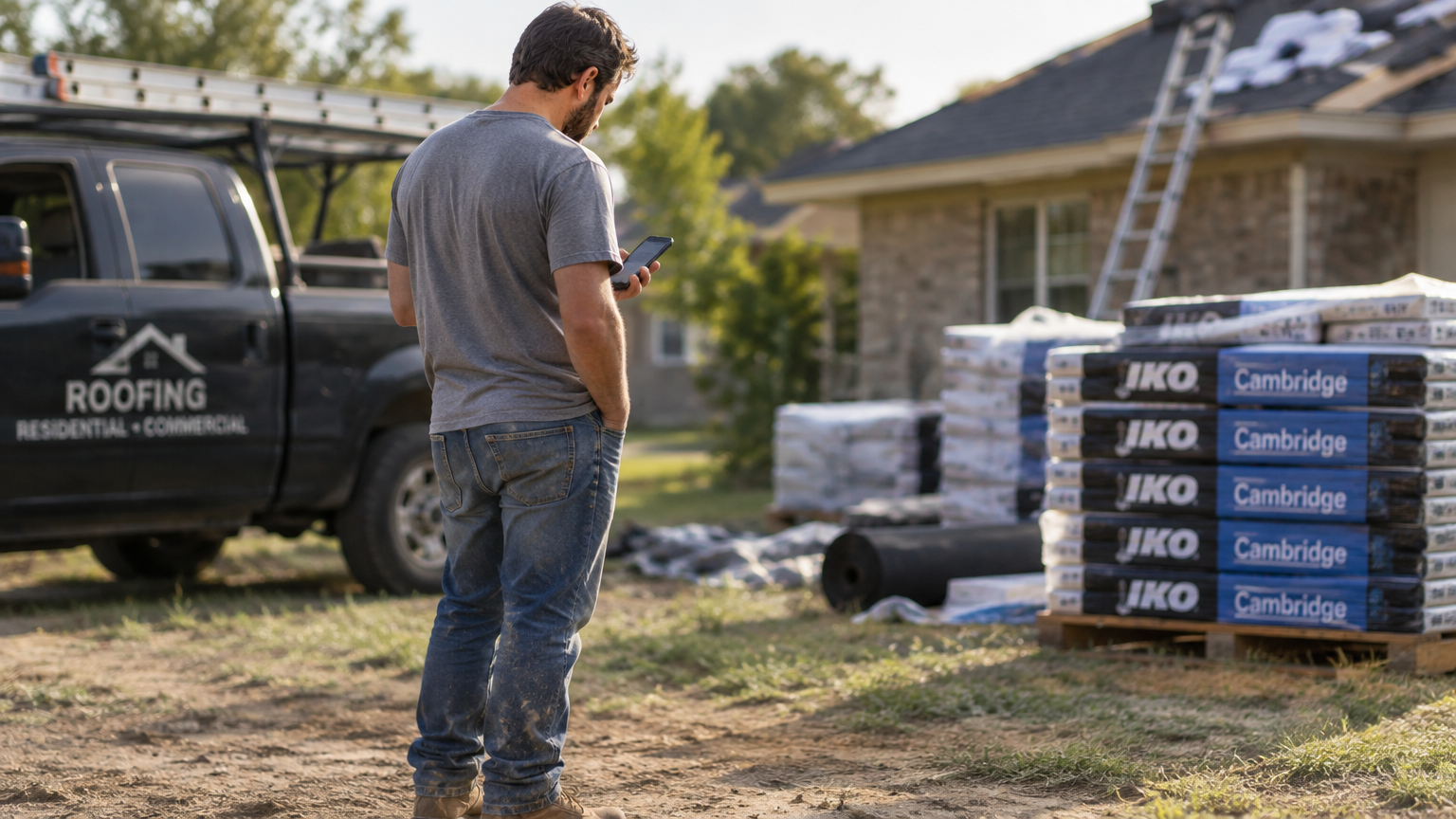


Your rep sent the bid three days after the inspection. The homeowner has already signed with someone else. That’s what slow, disconnected bidding does: it hands jobs to whoever gets there first.
We evaluated roof bidding software, focusing on how fast each tool moves from field inspection to a signed contract, and what happens to that contract after the customer says yes. We’re Zuper, and we’re one of the platforms on this list. We’ve laid out each platform’s strengths and trade-offs honestly so you can match the tool to how your operation actually runs. In the overall ranking, we weighted post-bid workflow connectivity most heavily: for growing roofing operations, what happens after the customer signs has more operational impact than bid speed alone.
Roof Bidding Software for Contractors in 2026
| Platform | Pre-Contract Features |
Post-Contract Features |
Field Crew Tools |
AI Features |
Avg. Review Score (Capterra, July 2026) |
|---|---|---|---|---|---|
| Zuper | Intelligent Quoting builds proposals on-site from aerial measurements; customer signs digitally on the same visit | Connects signed contract to scheduling, production, and job records with no re-entry; job records created automatically | Full iOS/Android app; AI-assisted field workflows; on-site structured checklists | CSR Agent (24/7 lead intake); Field Agent (beta); Dispatch Assistant; Zuper Sense AI business intelligence | 4.5/5 |
| AccuLynx | Live supplier pricing in estimates; built-in Supplement Tracker and Permit Tracker for insurance work | Manual handoff to scheduling required after approval | Mobile app available; photo management draws field user complaints | Lead Intelligence for AI-powered lead scoring; no AI dispatch or after-hours automation | 4.6/5 |
| JobNimbus | Good/Better/Best proposals on-site via tablet; deposit and signature collected before leaving property | Scheduling and crew assignment still require manual ops input after close | Strong mobile app; visual Boards track pipeline; reporting gaps noted in reviews | Scout AI assistant (beta); Assist AI for phone responses; no AI dispatching | 4.6/5 |
| Roofr | Instant Estimator qualifies website leads automatically; aerial measurements flow directly into proposals | Work orders created and sent manually after approval; no auto-trigger to scheduling or dispatch | Mixed mobile reviews; user permissions, job assignments, and work orders available; no scheduling or dispatch calendar | Automated follow-up sequences; limited AI beyond task triggers | 4.6/5 |
| Leap | Guided mobile pitch with GAF and Owens Corning integrations; signed contract collected on-site | Project management and crew scheduling available via Leap CRM; persistent reliability issues flagged in reviews | Built for field presentations; software glitches and lag flagged consistently in reviews | Customizable workflow automation; no AI dispatch, CSR agent, or business intelligence | 4.3/5 |
AccuLynx Source 1 | AccuLynx Source 2 | JobNimbus Source 1 | JobNimbus Source 2 | JobNimbus Source 3 | JobNimbus Source 4 | JobNimbus Source 5 | JobNimbus Source 6 | Roofr Source 1 | Roofr Source 2 | Leap Source 1 | Leap Source 2
Platform Summaries
1. Zuper, for AI-Connected Bid-to-Job Execution
Zuper’s Intelligent Quoting connects the entire bidding sequence into a single workflow. Aerial measurements from EagleView or Hover feed directly into formula-driven pricing. Your rep generates a branded proposal from the inspection, and the customer signs digitally before the truck backs out of the driveway. When they approve, the signed contract flows directly into scheduling, production, and job records. There’s no second round of data entry, no office staff rebuilding the work order, and no phone call to explain the scope. Maven Roofing’s close rate increased from 30% to 70% after switching, and the team reported saving 8 hours per person per week by eliminating manual handoffs between bid, schedule, and job start.
Zuper’s Dispatch Assistant recommends the right tech for each job by reading crew location, skill level, and availability, so your dispatcher assigns in seconds. The CSR Agent handles inbound calls 24/7, books inspections, and captures leads automatically, including during storm surges, when the CSR Agent handles up to 100x normal call volume without adding staff. Zuper Sense lets operators ask plain-language questions about sales performance, cash flow, and team activity and get answers without pulling custom reports. The depth of Zuper’s features means a steeper learning curve than point-solution tools, and onboarding takes longer than most contractors expect. Once you’re through the ramp-up, the admin savings and close rate gains show up fast.
|
Summary of Online Reviews |
|---|
|
Reviewers say Zuper is “a solid software that helps keep field operations organized and running smoothly” once past the learning curve, with one owner praising that “the dispatch board is amazing, and the integrations with our CRM and other technologies are incredible.”Capterra |
2. AccuLynx, for Roofing-Specific Estimate-to-Contract Conversion
AccuLynx is built exclusively for roofing, and its bidding tools reflect that focus. Live material pricing from SRS Distribution and other major suppliers feeds directly into estimates, so the quote you send reflects what shingles and underlayment actually cost today, not what they cost six weeks ago when the catalog was last updated. That matters in a market where construction input costs have climbed 6.2% in the first four months of 2026. The Supplement Tracker and Permit Tracker ensure insurance restoration bids move through the appropriate documentation stages. It’s critical when you’re running 15 storm jobs, and an adjuster is pushing for revised documentation before Friday’s deadline.
What a crew lead actually receives after the homeowner signs tells the real story. Scheduling and crew coordination require manual input: your ops manager builds the schedule, assigns the crew, and manually updates the job file before the crew can act on the approved scope. There’s no auto-generated scope brief from the signed estimate, so someone still has to populate the job record and communicate what the job actually includes. Lead Intelligence scores incoming leads by their close likelihood, helping reps prioritize their call lists. AccuLynx is a strong choice for companies with an established office coordination process that don’t need the bid to auto-trigger crew dispatch.
|
Summary of Online Reviews |
|---|
|
Reviewers consistently praise how AccuLynx centralizes the operation: “It keeps everything organized” says one office manager with more than two years of use, adding that “the platform provides strong value for the cost by replacing multiple systems.” One recurring critique involves estimate updating: one project manager notes it is hard to “duplicate estimate and update to live pricing” when a customer asks for a revised quote. Capterra |
3. JobNimbus, for Visual Field-First Bid Tracking
Capterra reviewers call JobNimbus “great for roofers,” and the field experience backs that up. The visual board system gives your team pipeline visibility without a status call, tracking every deal through customizable stages. Your rep builds a Good/Better/Best proposal on a tablet, collects a deposit on-site, and has a signed contract before leaving the customer’s property. Automated follow-up texts go out when a bid sits too long without a response, so leads don’t go cold while your rep is on another job. For shops where reps close independently and face-to-face, it’s hard to beat.
The gap shows up after the bid closes. JobNimbus doesn’t automatically push the approved job scope and crew assignment to your field team. A signed contract creates a new job record, but your ops manager still has to build the schedule, assign crews, and communicate the job brief. For shops running 3 or 4 crews, that coordination work is manageable. Scale to 8 or 10 crews, and you’re adding hours each week in coordination work that a connected platform would handle automatically. JobNimbus also has limited supplier integrations and is built primarily around residential retail; operations with significant commercial volume or complex multi-phase jobs will run into its ceiling faster.
|
Summary of Online Reviews |
|---|
|
Reviewers say JobNimbus is “great for roofers” with an invoice, payment, and scheduling system that “works very well.” The critiques center on scale and reporting: the same reviewer notes “the interface can feel a bit cluttered at times, especially when managing a lot of jobs,” and a VP of Operations adds that “the mobile app could not do what we needed it to do in terms of reporting.” Capterra |
4. Roofr, for Instant Measurement-to-Proposal Speed
Forty phone calls on a Wednesday in May, all from homeowners who want to know what a new roof costs. That is where Roofr earns its reputation. The Instant Estimator widget lives on your website: a homeowner answers a short set of questions, gets a ballpark price range, and you have a qualified lead without a cold call. Once that lead becomes a booked inspection, aerial measurement reports arrive within hours and feed into the proposal builder on the same platform. For your reps using Roofr on-site, the measurement and proposal experience is clean. Every step after the close requires a manual trigger from your office.
It’s a Tuesday afternoon in May, and your ops manager is trying to schedule three approved bids at once. Those signed contracts don’t automatically trigger work orders or crew dispatch. Your ops manager creates the work order manually and sends it from Roofr by email, but timing and crew assignment stay with your office. There’s no built-in scheduling calendar or dispatch tool. Roofr covers the full job cycle from lead to invoice, but none of those steps trigger automatically from the previous one. For operations that need the contract to push work to the field without manual input, it falls short of what a connected platform provides.
|
Summary of Online Reviews |
|---|
|
Reviewers praise Roofr’s intuitive interface: “Controls are intuitive and the autosave feature prevents losing progress,” says one office administrator with over a year of use, adding that “material orders have always been accurate.” The critiques focus on measurement reliability and pricing: one construction GM reports that “about once a month, they are unable to measure the pitch of a roof,” and another owner notes the “price increased 50% after we started using it more regularly.” Capterra |
5. Leap, for Field Presentation and Full-Cycle Job Management
Leap is built around the sales presentation experience. The mobile interface walks your rep through a structured pitch, generates a visually polished proposal in real time, and collects a signed contract on-site. Integrations with GAF QuickMeasure, Owens Corning, and other suppliers connect to the proposal workflow. For independent reps who close at the door without office backup, it’s built for that exact scenario.
Leap covers the full job cycle. Leap CRM adds project management, crew scheduling, and job coordination beyond the signed contract. On feature depth alone, that post-contract capability would rank Leap above platforms that rely on manual work orders. The reliability data changes that calculus. A crash mid-pitch or a lag spike during a crew handoff creates real operational risk, and the Capterra data reflects this: reviewers flag frequent software glitches and describe slow, laggy performance as a recurring problem, across 406 reviews. For shops that can absorb those reliability risks, the platform’s full-cycle coverage makes it worth considering. For field teams that need the app to perform consistently under pressure, the reviews tell a consistent story.
|
Summary of Online Reviews |
|---|
|
Reviewers praise Leap’s workflow customization. One co-owner calls it “the most customizable CRM for the industry,” noting that “grabbing an e-signature right on the contract on the app is cake.” The reliability issues don’t stay in the sales room: reviewers report “glitches and lag” disrupting both in-home presentations and day-to-day project coordination, making the full-cycle promise harder to deliver consistently. Capterra |
Spin-Off Rankings
We also broke down the top companies into three subcategories based on specialty.
The Top Roof Bidding Software in the US by Bid-to-Approval Speed
For contractors where bid turnaround is the primary bottleneck, these platforms deliver the fastest quote-to-close cycles.
- Roofr
- Zuper
- Leap
- AccuLynx
- JobNimbus
The Top Roof Bidding Software in the US by Field Crew Usability
For crews that build, present, and close bids on-site, the mobile experience is everything. These platforms hold up in the field.
- JobNimbus
- Leap
- Zuper
- Roofr
- AccuLynx
The Top Roof Bidding Software in the US by Post-Bid Job Execution
Winning the bid is step one. Getting the approved scope to your crew on time, without manual re-entry, determines whether that job makes or loses money. These platforms connect bidding to execution.
- Zuper
- AccuLynx
- JobNimbus
- Roofr
- Leap
Which Platform Fits Your Operation?
If you’re evaluating a switch from your current system, factor in onboarding time alongside features. Tools like Roofr and JobNimbus have shorter adoption curves, which matters if you’re mid-season or managing a team that resists change. Build the transition around your calendar, not your urgency to move.
If closing speed is the only gap, Roofr or Leap will help. But if approved bids sit while crews wait on job briefs, materials get ordered late, and schedules get rebuilt by hand, you have a workflow connectivity problem. That’s where roof bidding software either pays for itself or doesn’t.
Zuper’s Intelligent Quoting connects the signed contract directly to scheduling, production, and job records. To see where estimate errors cost you most, read how to reduce estimate errors in roofing and estimating software for roofing contractors. Or Schedule a Demo with Zuper to see the full workflow.